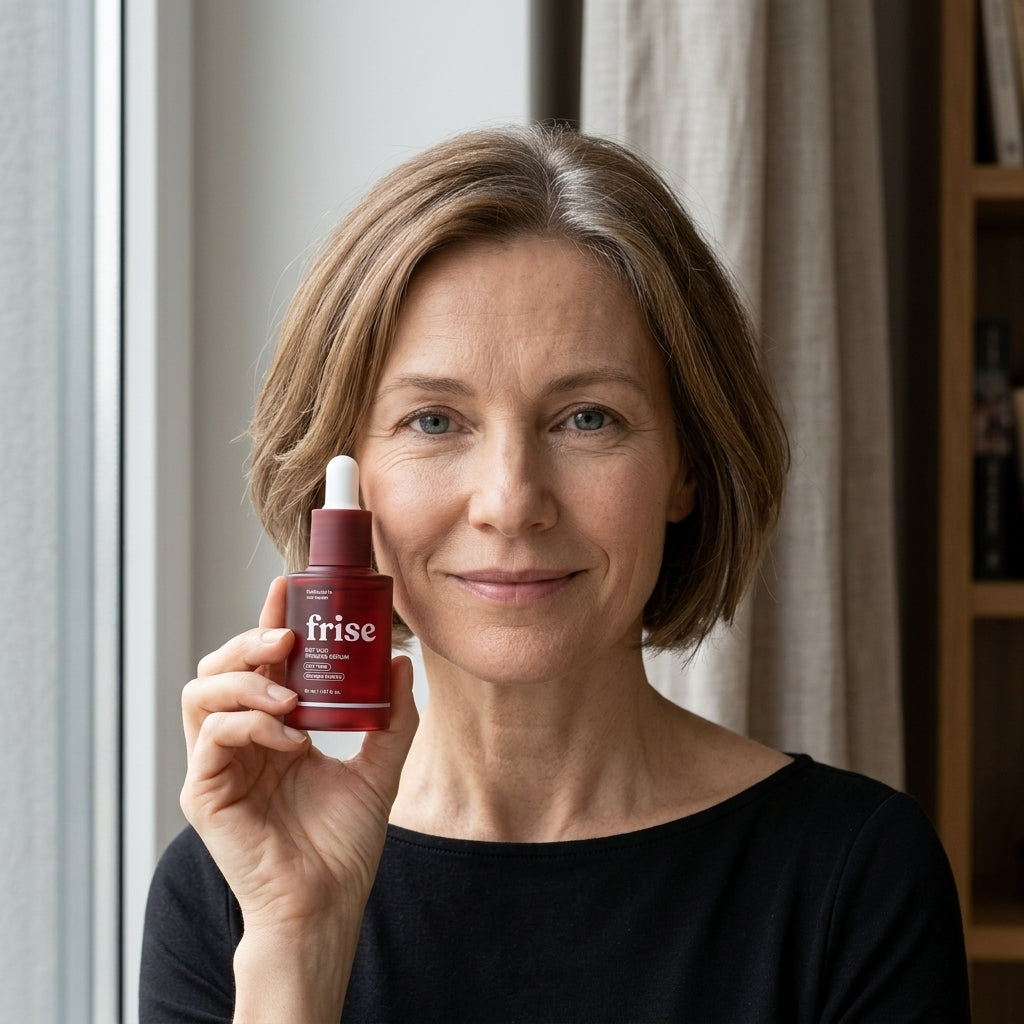
Collagen extract
The skin-conditioning ingredient in Frise. Topical collagen helps hold water at the skin’s surface, where dry cheeks can feel rough to the touch.


Cheeks soft after your morning cream, then tight again by lunch? Frise adds a softening layer underneath the moisturizer you already love.
Request a return within 30 days of delivery. Bottles must be unopened and unused for a change-of-mind return. You pay return shipping. For a wrong or damaged order, Frise covers return shipping. Contact Frise with your order number.
Dryness can show up as fine creases across the cheek. A moisturized cheek can still show pores and freckles, with a softer-looking surface.


Drag to compare, or tap a texture below.
 How to compare both cheeks

In the morning, pat Frise onto one cheek. Apply your usual moisturizer to both and use the same SPF as usual.
At lunch, look at both cheeks by the same window. Give a small smile. Notice where fine creases show and whether either cheek feels tight.
Frise puts skin-conditioning collagen extract directly on bare skin. That’s the extra step to take when your cheeks need more than another coat of cream.
Apply the face cream you already like over the serum. It helps slow moisture loss at the surface, so you can add conditioning without switching to a heavier cream.
When skin is dry, fine lines can stand out. Moisturizing plumps the surface and can make those lines look less noticeable.
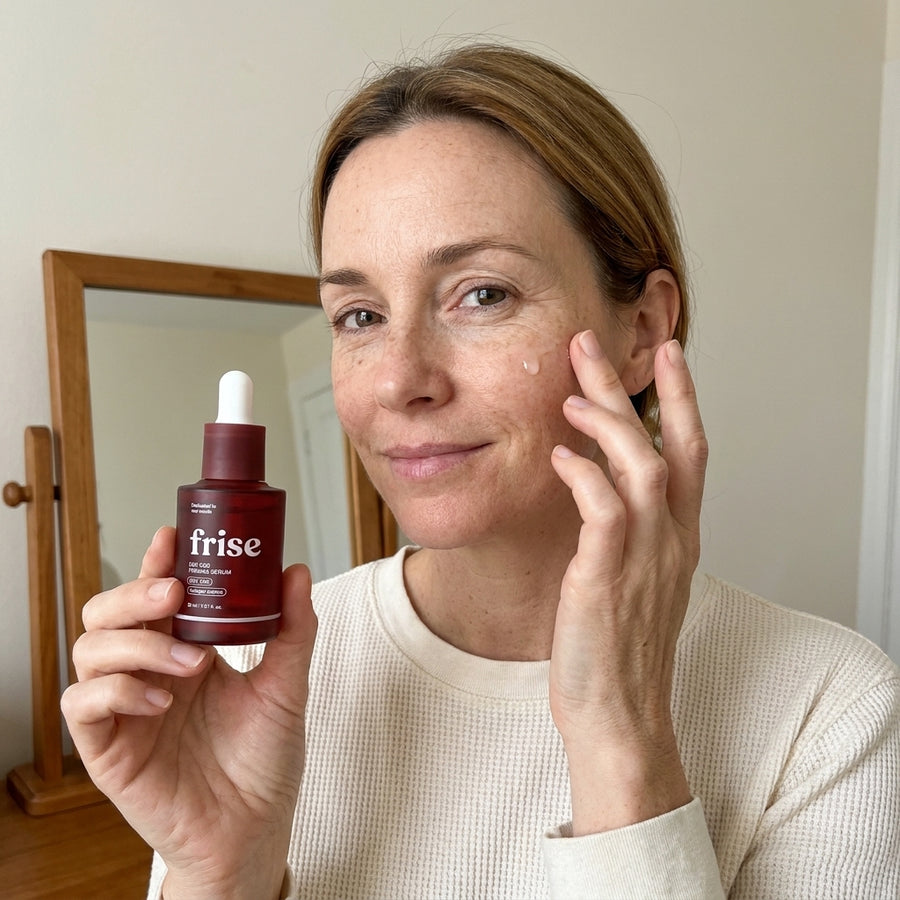
After cleansing, smooth a thin layer of Frise over bare skin, including the cheeks that tend to feel tight.
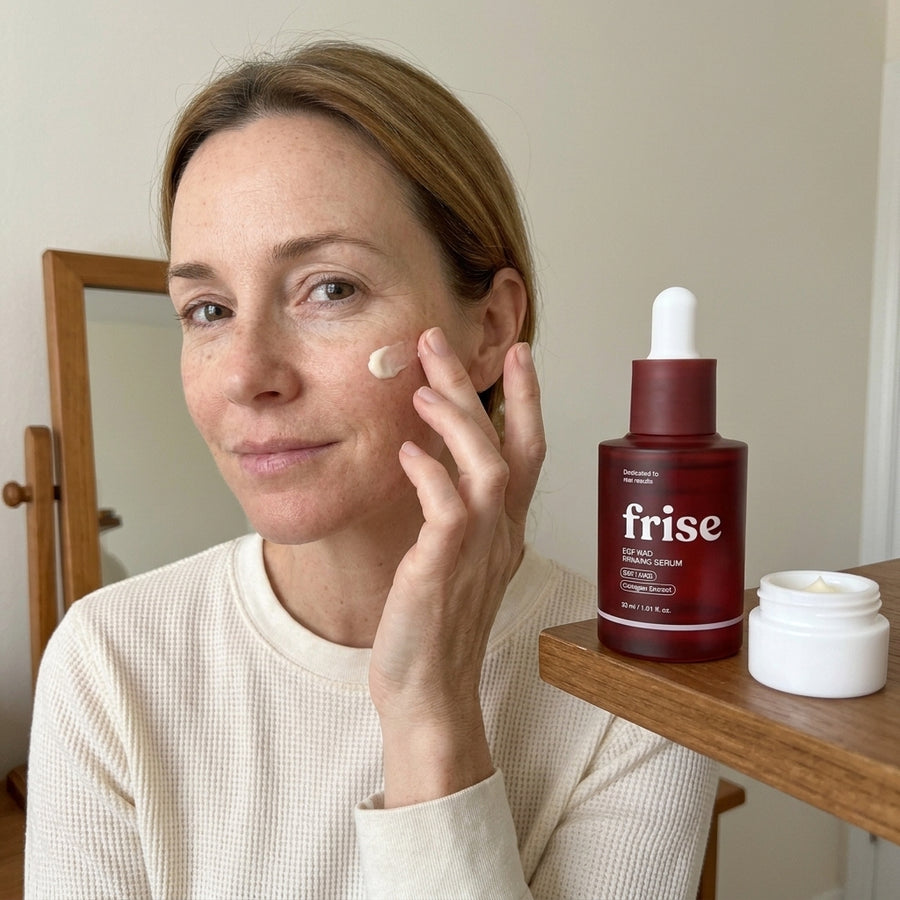
Let the serum settle, then apply your usual face cream over it. Finish with your morning SPF.
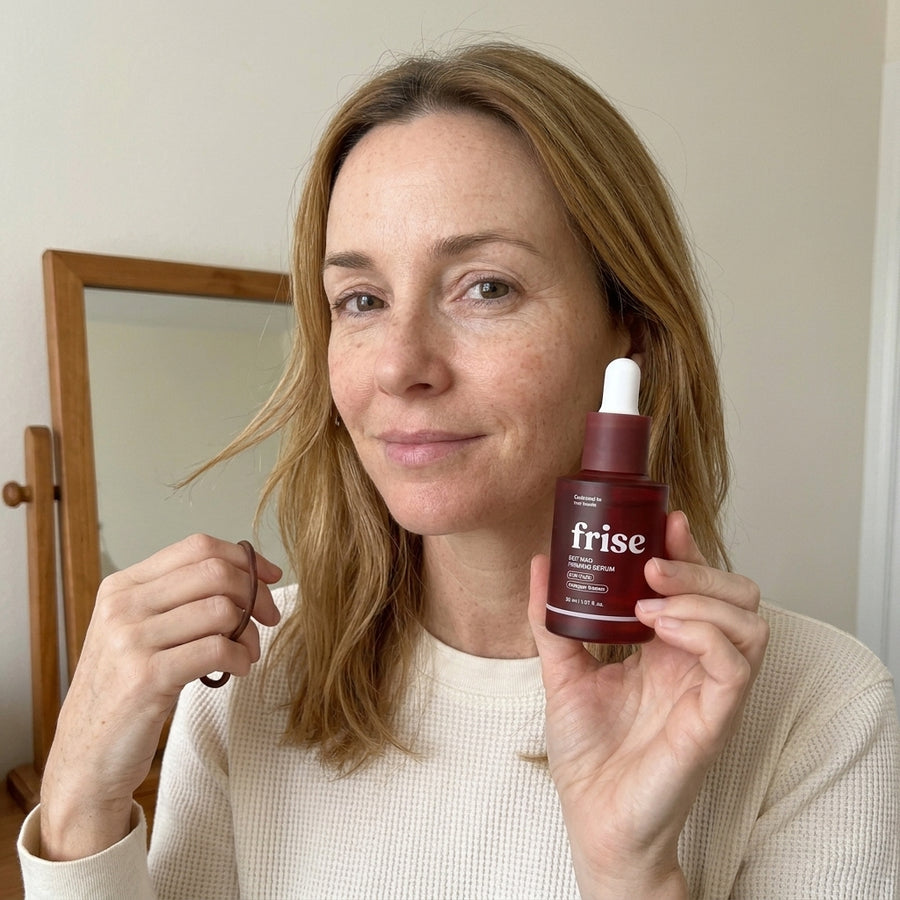
A thin layer is enough to spread over your cheeks. If it still feels tacky, give it a moment to settle before adding cream.
Collagen extract, EGF and NAD each have a different role. Here’s what’s in your serum.
Collagen extractThe skin-conditioning ingredient in Frise. Topical collagen helps hold water at the skin’s surface, where dry cheeks can feel rough to the touch.
 EGF
Short for epidermal growth factor, a small protein that acts as a messenger between cells.
 NAD
Short for nicotinamide adenine dinucleotide. It’s a coenzyme involved in the way cells use energy.
Yes. Apply Frise to clean skin first, then use your usual face cream. There’s no matching moisturizer to buy.
Serum first, face cream next, sunscreen last. Let each layer settle before applying the next one, and use the amount of sunscreen its label recommends.
A second coat gives you more of the same cream. Frise adds a separate conditioning layer with collagen extract underneath. It’s a way to care for dry-feeling cheeks while keeping the finish of the cream you chose.
Moisturized skin can look smoother because the surface holds more water. That’s especially relevant to the fine lines that look more pronounced when your cheeks feel dry.
Yes. A single bottle contains 30 mL (1.01 fl oz) and is a one-time purchase. It won’t renew automatically.
Start with one bottle for $34.99. If you want spares, three bottles are $59.99, about $20 each. Five are $99.99 with free standard US shipping. The crossed-out totals are based on the regular $45 single-bottle price.
Give dry cheeks a softening layer before you reach for your favorite cream. A full-size bottle of Frise is 30 mL. Buy it once and reorder when you’re ready.
$45.00 $34.99 USD
Save $10.01